Lower Connecticut River Valley County Dog Registration Information
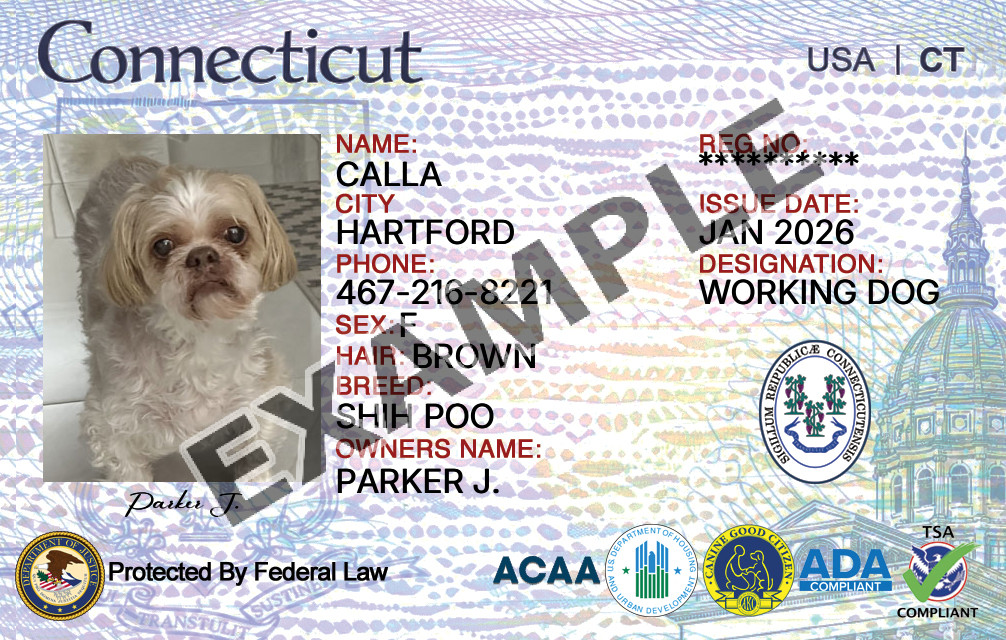
Service Dogs and Emotional Support Animals in Lower Connecticut River Valley, Connecticut
If you’re searching where do I register my dog in Lower Connecticut River Valley County, Connecticut for my service dog or emotional support dog, the key point is that most dog “registration” in Connecticut is handled through local municipal dog licensing (typically the Town Clerk) rather than a single countywide or federal registry. In the Lower Connecticut River Valley region, requirements and processes can vary by town (Essex, Old Saybrook, and other nearby municipalities), but the common thread is that licensing is local and usually requires proof of rabies vaccination.
Where to Register or License Your Dog in Lower Connecticut River Valley County, Connecticut
In this region, dog licensing is handled at the municipal level. If you live in one of the towns served by the Lower Connecticut River Valley Council of Governments (RiverCOG), your first step is typically your Town Clerk (for the dog license) and your local Animal Control Officer (for certain enforcement, lost/found, and rabies/quarantine-related matters). Below are official offices with verified contact details that can help residents get pointed to the correct local licensing process.
Old Saybrook Town Clerk (Dog Licenses)
302 Main Street
Old Saybrook, CT 06475
- Dog licenses can be issued in person or by mail.
- Proof of rabies is required; proof of spay/neuter is often required for the altered rate.
- This office serves residents who keep their dog in Old Saybrook.
Essex Town Clerk (Dog Licenses)
29 West Ave
Essex, CT 06426
- This office issues local licenses for dogs kept in Essex.
- Ask about first-time licensing vs. renewal requirements (rabies and spay/neuter documentation are commonly requested).
- If you live in a different RiverCOG member town, your dog license is typically handled by that town’s clerk, not Essex.
Lower Connecticut River Valley Council of Governments (RiverCOG) — Regional Contact (Referral Resource)
Essex, CT 06426
- RiverCOG is not the dog-licensing office, but it serves multiple member towns in the Lower Connecticut River Valley region.
- If you’re unsure which town office to contact, RiverCOG can help confirm the appropriate municipality based on where the dog is kept.
- For the actual dog license, you will typically be referred to your Town Clerk.
Overview of Dog Licensing in Lower Connecticut River Valley County, Connecticut
How dog licensing works in this region
In Connecticut, dog licensing is generally a town-by-town process. While people often search for “county registration,” the practical answer for most residents is: your dog license is issued by the Town Clerk (or the local municipal licensing office) in the town where the dog is kept. In the Lower Connecticut River Valley region, the exact form, payment method (in-person, mail, or local online options), and renewal reminders can vary by municipality.
Common requirements you should expect
Even though each town sets its own workflow, licensing typically centers on a few consistent requirements:
- Rabies vaccination proof (a current certificate showing the vaccination date and duration/expiration)
- Dog description details (name, color, breed/markings, sex)
- Spay/neuter proof if applying for the altered rate (often noted on the vaccination record or provided via vet documentation)
- Owner/keeper information and the address where the dog is kept
- Payment of the licensing fee (fees may differ for altered vs. unaltered dogs)
Dog license vs. “service dog registration” vs. ESA paperwork
Many searches combine dog licensing with service dog or emotional support animal questions. It helps to separate them:
| Category | What it is | Who issues it | Typical purpose | What you may need to show |
|---|---|---|---|---|
| Dog license | Local license/tag for dogs kept in a municipality (often renewed annually). | Usually the Town Clerk in your town. | Rabies compliance, identification, and local accountability; supports animal control functions. | Rabies certificate; spay/neuter proof (if applicable); basic owner/dog details. |
| Service dog | A dog trained to perform tasks for a person with a disability (public access protections depend on applicable law). | No universal federal registry. Legal status comes from the dog’s training and the handler’s disability-related need. | Public access accommodations where allowed by law; assistance with disability-related tasks. | Generally not a “registration.” In many settings, you may be asked limited questions about tasks (not documents). Separate from licensing, the dog may still need a local dog license. |
| Emotional support animal (ESA) | An animal that provides emotional support; not the same as a service dog. | No universal federal registry. Status is typically supported by documentation for certain housing contexts. | Housing-related accommodations where applicable (rules differ from service dog access rules). | Typically documentation for housing requests; still subject to local dog licensing requirements as a dog kept in town. |
What You Need Before Registering a Dog
Documents commonly requested by Town Clerks
To obtain a dog license in Lower Connecticut River Valley County, Connecticut (meaning within the towns of this region), prepare for the most common documentation requests:
- Rabies vaccination certificate from your veterinarian (current at the time of licensing)
- Spay/neuter proof (if you want the altered rate and the dog wasn’t previously licensed as altered in that town)
- Your identification and current address (some towns may request proof of residency for new registrations)
- Any prior dog license information (helpful for renewals)
If your dog is a service dog or emotional support dog
In most towns, the dog licensing transaction is handled the same way as any other dog: it is still a local dog license requirement. What may differ is whether certain fees are waived or reduced for qualifying service animals. If you believe a fee exemption applies to your situation, ask your Town Clerk how they apply local and state rules for service animals. Keep in mind that an ESA is not automatically treated the same as a service dog under disability access laws, and local licensing still applies as long as the dog is kept in town.
Steps to Register or License a Dog in Lower Connecticut River Valley County, Connecticut
Step 1: Confirm the correct town office
Because dog licensing is municipal, the “right” place depends on where the dog is kept. Start with:
- Your Town Clerk (dog license issuance and renewal)
- Your local Animal Control or municipal public safety/health office (questions about rabies quarantine, bites, lost/found, and certain enforcement matters)
Step 2: Gather proof of rabies vaccination (and spay/neuter status)
Most towns require proof of current rabies vaccination to issue a license. If your dog is spayed or neutered and you are licensing for the first time (or updating the record), bring or submit documentation that shows altered status.
Step 3: Choose your submission method (in person or by mail)
Some towns issue dog licenses in person, by mail, or both. For example, some municipal pages state that licensing can be done in person or by mail and that you should include the rabies paperwork and other required documentation. If using mail, confirm payment method and whether a return envelope is required.
Step 4: Pay the fee and receive your tag/license
Fees commonly differ depending on whether the dog is altered. Many towns issue a tag and record the license to the address where the dog is kept. If you are renewing, you may only need updated vaccination documentation if the town’s records indicate rabies has expired or needs updating.
Step 5: Keep your records current
Keep a copy of your dog’s rabies certificate and dog license information in an accessible place. If you move to a different town in the Lower Connecticut River Valley region, you will typically need to license the dog in the new town where the dog is kept.
Service Dog Laws in Lower Connecticut River Valley County, Connecticut
No single “service dog registry” for Connecticut or the U.S.
A common point of confusion is the idea that you must “register” a service dog with a federal database. In practice, there is no one universal federal government registry that makes a dog a service dog. Service dog status generally comes from the dog being trained to perform specific tasks for a person with a disability, plus the protections and responsibilities described in applicable laws.
How service dogs relate to local dog licensing
Even though service dogs are not created by a registry, local dog licensing may still apply. In other words, your service dog can be both:
- a service animal for disability-related assistance, and
- a dog that must be licensed locally (dog license in Lower Connecticut River Valley County, Connecticut) based on where the dog is kept.
Practical guidance for handlers
- If a business or landlord uses informal language like “service dog registration,” ask what they mean. Often, they are actually asking whether your dog is licensed by the town and vaccinated against rabies.
- For local licensing questions, start with your Town Clerk (and keep your rabies documentation current).
Emotional Support Animal Rules in Lower Connecticut River Valley County, Connecticut
What an ESA is (and is not)
An emotional support animal (ESA) generally refers to an animal that provides emotional support or comfort. An ESA is not the same as a trained service dog that performs disability-related tasks. This distinction matters because the legal frameworks and access rights can be different.
How ESAs relate to town dog licensing
Regardless of ESA status, if the animal is a dog kept in a town within the Lower Connecticut River Valley region, the dog may still need a municipal dog license. In other words, “ESA paperwork” (often used in housing contexts) does not replace the standard dog licensing process handled by the Town Clerk.
If your question is really about housing documentation
If your goal is housing accommodations, the process often involves providing appropriate documentation to the housing provider. However, that is separate from the question of where to register a dog in Lower Connecticut River Valley County, Connecticut, which generally means the local town dog license. For licensing, focus on rabies proof and your town’s licensing steps.
Frequently Asked Questions
What You May Need
-
CommonProof of rabies vaccinationCurrent certificate from a veterinarian
-
VariesProof of residencySometimes requested for new licenses
-
VariesIdentificationDriver’s license or other ID
-
CommonSpay/neuter documentation (if applicable)Helps confirm altered license category
-
CommonPayment for licensing feeMethod depends on the town’s process
Local SEO focus
This page is designed to answer: where do i register my dog in Lower Connecticut River Valley County, Connecticut for my service dog or emotional support dog.
- dog license in Lower Connecticut River Valley County, Connecticut
- animal control dog license Lower Connecticut River Valley County, Connecticut
- where to register a dog in Lower Connecticut River Valley County, Connecticut
- dog licensing requirements Lower Connecticut River Valley County, Connecticut
Register A Dog In Other Connecticut Counties
Select your county below to get started with your dog’s ID card. Requirements and license designs may vary by county, so choose your location to see the correct options and complete your pup’s registration.
- Capitol Dog License Cards
- Connecticut's eight historical counties Dog License Cards
- Fairfield Dog License Cards
- Greater Bridgeport Dog License Cards
- Hartford Dog License Cards
- Litchfield Dog License Cards
- Middlesex Dog License Cards
- Naugatuck Valley Dog License Cards
- New Haven Dog License Cards
- New London Dog License Cards
- Northeastern Connecticut Dog License Cards
- Northwest Hills Dog License Cards
- South Central Connecticut Dog License Cards
- Southeastern Connecticut Dog License Cards
- Tolland Dog License Cards
- Western Connecticut Dog License Cards
- Windham Dog License Cards
